Time Together
More free time does not automatically mean both people want to spend all of that time together.
How much togetherness and independence are we each imagining?
BEFORE YOU RETIRE • STEP 5 OF 6
Retirement changes your life, but it may change someone else’s too.
When work ends, your schedule changes, your availability changes, and the way you spend time may change too. The people closest to you may already have their own ideas about what retirement will look like. It is better to discover those expectations in conversation than by accident.
DO NOT RELY ON ASSUMPTIONS
One person may imagine more travel. Another may imagine more time at home.
One person may expect to spend most days together. Another may expect each person to continue having plenty of independent time.
Adult children may imagine that retirement means you are suddenly more available. Aging parents may need more help. Household responsibilities may shift simply because one person is now home more often.
None of those expectations are necessarily unreasonable. The problem comes when everyone assumes they are obvious.
Unspoken expectations have a way of becoming very real expectations.
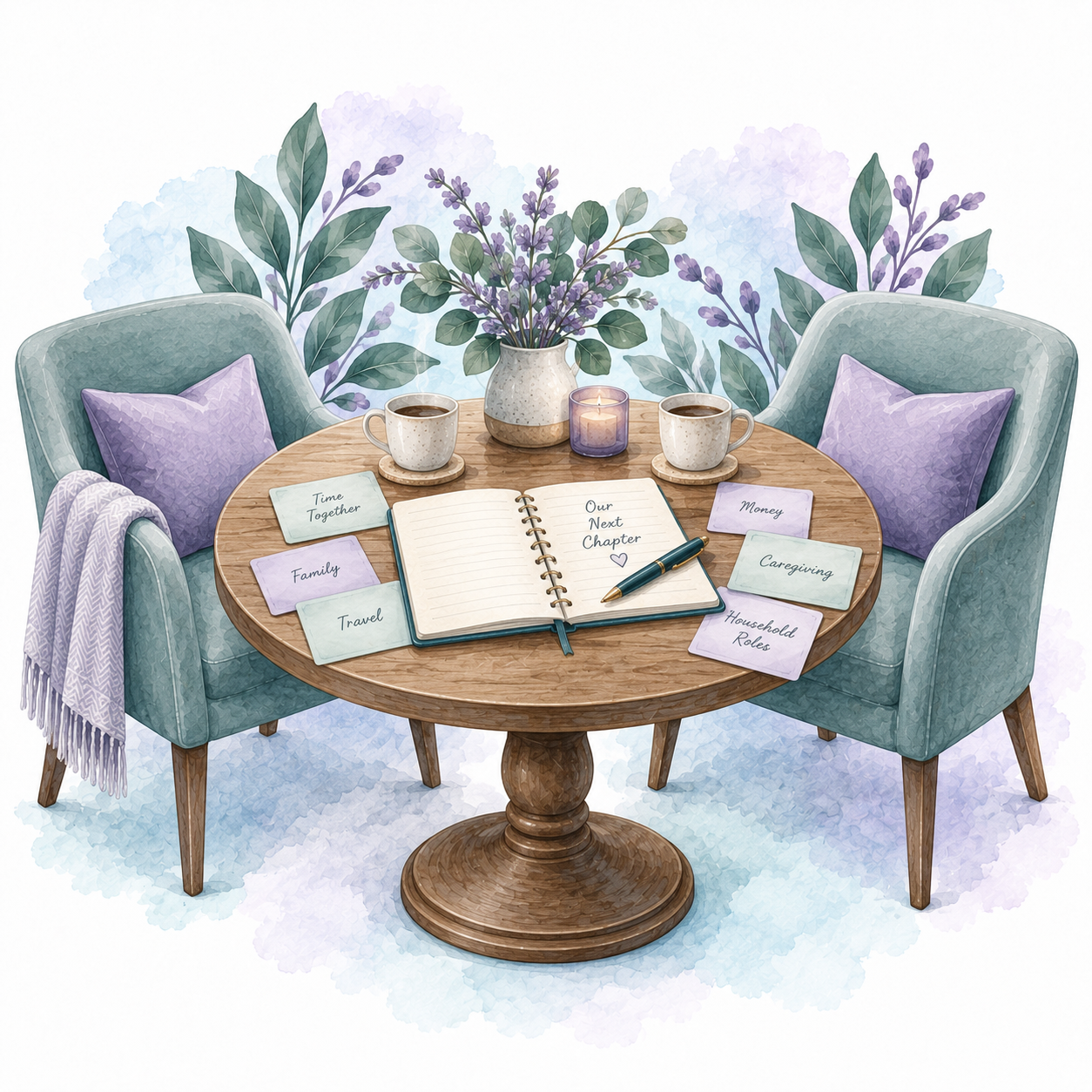
PUT IT ON THE TABLE
You do not need to create rules for your future. The goal is simply to make assumptions visible.
More free time does not automatically mean both people want to spend all of that time together.
How much togetherness and independence are we each imagining?
Children and grandchildren may see retirement as new availability for visits, childcare, errands, or help.
What might our family assume retirement means for our time?
Travel can be part of the retirement dream, but people often differ in how often, how far, or how much they actually want to travel.
Are we imagining the same amount and kind of travel?
Even when the financial plan is solid, people can have very different comfort levels about spending in retirement.
What will feel comfortable to spend, save, or say no to?
Retirement sometimes coincides with growing responsibilities for parents, grandchildren, partners, or other family members.
Are there caregiving expectations we should discuss now?
Being home more can quietly change expectations about cooking, errands, cleaning, appointments, and everyday responsibilities.
Are we assuming certain roles will change once work ends?
A LITTLE REFLECTION
This is not about negotiating every detail of retirement before it begins. It is about discovering where two people may be carrying different pictures of the same future.
Who will be most affected by the fact that I am no longer working?
What am I assuming my partner, family, or friends will want from me?
What might they be assuming about my availability?
Are there responsibilities I expect to change without ever having discussed them?
Which conversation would be easier to have now than after retirement begins?
ONE THING TO DO
Do not begin by explaining your own plan.
Ask the question first and listen to the answer.
You may learn more from the differences than from the things you already agree on.
BEFORE YOU MOVE ON
Retirement will change, and the people around you will change too.
These conversations are not contracts. They are simply a way to begin retirement with fewer hidden assumptions.
You can keep talking, adjusting, and learning once real life replaces the plan.